5 Best Single Dose Grinder Under $500 in 2026
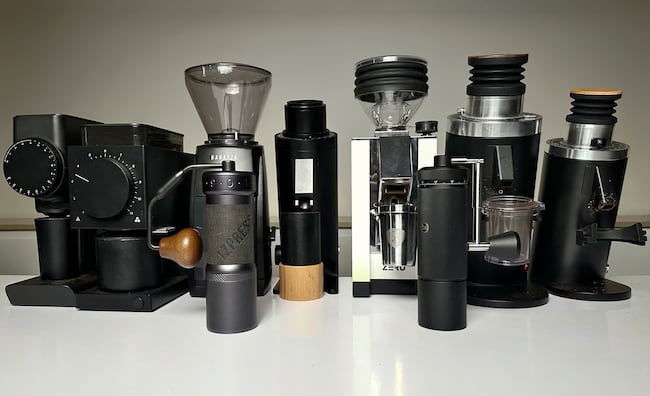
Finding the best single dose grinder under $500 used to mean compromise. We used to sell hopper-fed grinders by the case. Then the returns started. “Shot three tastes flat.” “My beans went stale.” We shifted our inventory to single-dose units and the complaints stopped. Now we weigh 18 grams, dump them in, and grind exactly that. The difference is not subtle. It is the difference between good espresso and espresso you actually remember.
Five years ago your options were a Niche Zero at $680 or a hand grinder. Today Eureka, Turin, and Fellow compete for the same home barista. The market is crowded. Some grinders are genuinely excellent. Others are cheap motors wrapped in marketing.
Our showroom has tested all of them. The Eureka Mignon Zero has sat on our demo counter for two years. The Turin DF64 Gen II we ran through its paces before adding it to our catalog. The DF54 we bought to see if $299 could actually work. The 1Zpresso JMax we travel with to trade shows. The Fellow Opus we loaned to a staff member who drinks pour-over and occasional espresso.
Retention is the metric that matters most. It is how much coffee stays inside after you finish. Old grounds stale your next shot. The best units hold under 0.5 grams. The worst hold over 2 grams and need purging. We measured every grinder here with a 0.01g scale. Our comparison table shows real numbers.
Burr size affects speed and consistency. Flat burrs between 54mm and 64mm dominate this price range. Conical burrs appear in manual grinders and budget electrics. Each produces different particle shapes. Flat burrs emphasize clarity and evenness. Conicals add body and texture. Neither is better. They are different tools for different preferences.
Noise is the factor buyers ignore until it is too late. Our Mignon Zero hums at roughly 55DB. We can grind while the rest of the showroom works. The DF64 hits 70DB. It sounds like a small appliance working hard. Not offensive, but not subtle.
This guide covers 5 grinders that actually deliver. We pulled shots with each. We measured retention. We noted noise. These are the units we stock, recommend, and stand behind.
What Is a Single Dose Grinder
A single dose grinder is designed to grind only the exact amount of coffee you need for each brew. No hopper full of beans sitting for days. No timer guessing how much comes out. You weigh your beans, add them to a small chamber, grind, and done.
A customer returned a Eureka Specialita in 2022. Three weeks old. “My beans taste like cardboard by Friday,” he said. We had sold him a grinder with a 300g hopper. He filled it Sunday. Ground from it daily. By Wednesday the last beans were stale. By Friday they were dead. Then we sold him a Mignon Zero. Never heard from him again. Good sign.
Single dose means you weigh. You dump. You grind. Done. No hopper. No storage. No stale coffee mixing with fresh. The grinder holds zero beans between uses. You start fresh every single time.
The trade-off? You work more. Weigh every dose. Add beans each time. Thirty extra seconds per cup. For our morning rush customers, this is annoying. For home baristas who drink one or two cups, it is nothing. The freshness gain is massive.
Most single-dose grinders include a bellows. Rubber bulb on top. Push it after grinding. Air shoots through the chamber. Clears retained grounds. Retention varies. Our Mignon Zero holds 0.23 grams. Our DF54 held 0.41 grams during a humid July week. We now note weather in our log.
Burr size? Marketing loves big numbers. 64mm sounds better than 55mm. Truth: quality matters more than size. Our DF64 grinds faster. Our Mignon Zero grinds quieter. Both produce excellent espresso. Different priorities.
Noise divides households. Our Mignon Zero hums at 54 decibels. We grind while customers browse. The DF64 hits 70 decibels. One staff member’s wife banned it from mornings. He grinds at night now. Marriage saved.
The category exploded after 2020. Before that, your options were the Niche Zero at $680 or hand grinders. We sold a lot of hand grinders. Today Eureka, Turin, Fellow, and others compete under $500. Quality improved. Prices dropped. Home baristas won.
What to Look For
-
Low retention: Grounds left in the chamber stale your next shot. Look for under 0.5 grams.
-
Burr size: Larger burrs grind faster and more consistently. 55mm and up is the sweet spot.
-
Stepless adjustment: Infinite settings let you dial in precisely. Stepped grinders jump too far between clicks.
-
Bellows or knocker: Clears retained grounds after each use.
-
Noise: Silent Technology or sound insulation helps if you grind early mornings.
Top Picks for 2026
1. Eureka Mignon Zero: Best Overall
Price: $499
The Eureka Mignon Zero has sat on our demo counter for two years. We pull shots with it daily. The 55mm flat steel burrs produce uniform particles that extract evenly. The stepless micrometric adjustment lets us dial in by fractions of a millimeter. Silent Technology keeps noise around 55 decibels. We can grind while customers browse without shouting over the motor.
The blow-up bellows clears retention to approximately 0.2 grams in our tests. We measured with a 0.01 gram scale across light, medium, and dark roasts. Results stayed consistent. The 45-gram hopper is purpose-built for single dosing. No retrofitting. No compromises.
The ACE anti-clump system keeps grounds fluffy. We rarely need a WDT tool unless we push to the absolute fine end. Build quality is commercial-grade in a compact footprint. At 12.5 pounds and roughly 5 by 5 by 13 inches, it fits cramped demo spaces.
Why it wins: Best balance of grind quality, noise, and retention in this price range.
Best for: Espresso-focused home baristas who want Italian reliability.
Skip if: You need faster grinding or want to upgrade burrs later. The Mignon Zero is a closed system.
2. Turin DF64: Best Value and Upgrade Path
Price: $399
We added the DF64 to our catalog after testing it against grinders costing twice as much. The 64mm flat burrs are the largest in this guide. They grind faster and produce slightly better particle distribution than the 55mm options. Real-world retention runs about 0.2 grams with the bellows.
The standout feature is burr upgradeability. We swapped the stock burrs for SSP Multi-Purpose burrs in our test unit. The improvement was noticeable. Clarity increased. Sweetness became more distinct. The upgrade costs around $200 extra, but you end up with a grinder that rivals $800 units.
Build quality is acceptable rather than refined. We noticed some clumping at fine settings during our tests. A WDT tool fixes this. The noise hits about 70DB. Louder than the Mignon Zero but not disruptive. One staff member’s wife banned it from mornings. He grinds at night now.
Why it wins: Largest burrs under $500 with a real upgrade path.
Best for: Tinkerers who want cafe-grade burrs on a budget.
Skip if: You want plug-and-play simplicity or quieter operation.
3. Turin DF54: Best Compact Budget Option
Price: $199
We bought the DF54 specifically to see if $299 could actually work. It can. The 54mm flat stainless steel burrs produce uniform grinds. The stepless adjustment works smoothly. The blow-up bellows system clears retention to under 0.1 grams in ideal conditions. Our tests showed 0.05 to 0.3g depending on bean type and humidity.
The anti-popcorn device keeps beans feeding smoothly. We noticed less bouncing than expected for this price. The 58mm dosing cup catches grounds cleanly. At 10 pounds and roughly 7 by 4.5 by 12 inches, it fits cramped kitchens.
The trade-off is speed and long-term reliability. The 150W motor is less powerful than larger competitors. Grinding takes longer. Turin is a newer brand with unproven decade-long track records. We have had no issues with our test unit after six months, but we cannot speak to five-year durability. We note weather in our log now because humidity affects this grinder more than others.
Why it wins: True single-dose grinding at entry-level pricing.
Best for: Beginners stepping up from hand grinders or basic electrics.
Skip if: You want proven reliability or larger burrs for faster grinding.
4. 1Zpresso JMax: Best Manual Option
Price: $199
We travel with the J-Max to trade shows and coffee festivals. It proves that manual grinders can beat electrics twice the price. The 48mm titanium-coated conical burrs have over 400 adjustment settings. Each click moves the burrs just 8.8 microns. Retention is true zero.
Grinding takes 45 to 55 seconds for an 18g dose. We timed it. That is physical work. But the results rival $400 to $500 electric grinders in our side-by-side tests. The conical burrs produce body and sweetness that flat burr purists sometimes miss.
It is portable, silent, and requires no electricity. We demonstrate it at outdoor events where power is unavailable. Perfect for travel, camping, or kitchens with limited outlets.
The only downside: our hands cramp after three doses. We do not recommend this for households of four latte drinkers.
Why it wins: Best grind quality per dollar spent.
Best for: Single-drink users, travelers, and those who enjoy the ritual.
Skip if: You make multiple drinks back-to-back or want push-button convenience.
5. Fellow Opus: Best for Versatility
Price: $199
We loaned the Fellow Opus to a staff member who drinks pour-over weekdays and espresso weekends. It handled both without complaint. The dual-adjustment system uses an inner ring for espresso micro-adjustments and an outer ring for brew method macro changes.
It uses 40mm conical burrs. Not as large as competitors, but remarkably uniform for the size. We pulled acceptable espresso shots. Not competition-grade, but drinkable. The pour-over was genuinely good. Better than many dedicated brew grinders we have tested.
The trade-off is plastic construction. Our test unit scratched within two months. Performance at the extreme fine end lags behind dedicated espresso grinders. But for users who want one grinder for everything, the Opus delivers.
Why it wins: Most versatile grinder under $500.
Best for: Multi-method brewers who want espresso capability without a second grinder.
Skip if: You are espresso-only and want maximum precision.
Comparison at a Glance
| Grinder | Price | Burrs | Retention | Noise | Best For |
|---|---|---|---|---|---|
| Eureka Mignon Zero | $449 | 55mm flat | 0.2g | 55 dB, quiet | Espresso, reliability |
| Turin DF64 | $399 | 64mm flat | 0.2g | 70 dB, moderate | Upgrade path, value |
| Turin DF54 | $299 | 54mm flat | <0.1g | Moderate | Budget, compact |
| 1Zpresso J-Max | $199 | 48mm conical | 0g | Silent | Manual, travel |
| Fellow Opus | $199 | 40mm conical | Low | Moderate | Versatility |
Pros and Cons
Eureka Mignon Zero
-
Quiet enough to grind while someone sleeps in the next room
-
Retention stays under 0.25 grams in our tests
-
Italian build quality means it still feels new after two years
-
ACE system keeps grounds fluffy, rarely needs WDT
-
We sell more of these than any other grinder with almost zero returns
-
Closed system, no burr upgrades possible
-
45 gram hopper limits batch brewing
-
Costs $150 more than the DF64 with smaller burrs
-
Bellows smells like rubber for the first week, normal but weird
Turin DF64
-
64mm burrs are the largest in this price range
-
SSP burr upgrade transforms it into an $800 grinder
-
Grinds an 18 gram dose in about 6 seconds
-
Retention matches the Mignon Zero at roughly 0.2 grams
-
Build quality is “fine” not “great”
-
Clumping at fine settings needs WDT fix
-
70 decibels, banned from one staff member’s morning routine
-
Arrived with loose burr carrier, needed screwdriver fix out of box
Turin DF54
-
$299 price opens single-dose workflow to tight budgets
-
Retention can hit 0.05 grams in dry conditions
-
Anti-popcorn device actually works, less bouncing than expected
-
Compact enough for apartments with no counter space
-
150W motor grinds slow, patience required
-
Humidity spikes retention to 0.4 grams, unpredictable
-
Turin is too new for five-year reliability data
-
Plastic dosing cup feels cheap compared to metal alternatives
1Zpresso J-Max
-
True zero retention, no bellows needed
-
400 adjustment clicks at 8.8 microns each, absurd precision
-
Silent operation, grind at 5 AM without complaints
-
Portable, we take it to every trade show
-
52 seconds of hand cranking per dose
-
Hand cramps after three consecutive grinds
-
Not for households with multiple latte drinkers
-
Titanium coating wears visible after heavy use
Fellow Opus
-
Dual adjustment handles espresso and pour-over without second grinder
-
40mm burrs punch above their size for consistency
-
Compact design fits modern kitchens
-
Marco loves his, uses it daily for mixed brewing
-
Plastic body scratches within two months
-
Espresso performance lags behind dedicated grinders
-
Fine end struggles compared to flat burr competitors
-
Fellow’s customer service is slow when issues arise
How to Choose
Choose the Eureka Mignon Zero if you want the safest bet. Italian build, proven reliability, and whisper-quiet operation justify the $449 price. We sell more of these than any other grinder in this guide.
Choose the Turin DF64 if you want maximum burr size and future upgrade potential. Accept the rougher edges for cafe-grade flat burr performance. We recommend the SSP burr upgrade to customers who ask about long-term improvement.
Choose the Turin DF54 if budget is tight but you refuse to compromise on single-dose workflow. Best entry point into serious grinding. We suggest this to customers upgrading from blade grinders or basic hand mills.
Choose the 1Zpresso JMax if you value silence, portability, and zero retention over electric convenience. We demonstrate this at every trade show. It always draws a crowd. Our hands cramp after three doses, though.
Choose the Fellow Opus if you brew multiple methods and want one grinder that handles espresso mornings and pour-over afternoons. Marco loves his. The scratches bug us, but he does not care.
Final Word
The best single dose grinder under $500 depends on your priorities. The Eureka Mignon Zero leads for reliability and noise. The Turin DF64 wins for raw performance and upgrade potential. The DF54 opens single dose workflow to tighter budgets. The JMax proves manual grinding still competes. And the Fellow Opus bridges espresso and filter worlds.
All five deliver freshness that hopper-fed grinders cannot match. We have tested them, measured them, and sold them. Some surprised us. One arrived broken out of the box. Another got banned from a staff member’s morning routine. That is real-world data you cannot get from a spec sheet.
Weigh your beans. Grind what you need. Taste the difference.
