Discovering Flow Control: The Art of Espresso
Flow control sounds like marketing fluff until you actually taste what it does. We added flow control devices to our ECM Synchronika II and Profitec Pro 700 test machines and ran the same Ethiopian light roast through standard extraction versus slow pre-infusion. The controlled flow shot was sweeter, less sharp, and had none of the hollowness that usually comes with beans roasted five days ago. That was the moment we stopped being skeptical.
This tool is not just for gear heads chasing the next upgrade. It genuinely helps you pull more flavor out of your coffee and fix problems that grind and dose adjustments cannot touch. Whether you are running a plumbed-in cafe setup or a reservoir-based home machine, flow control opens up options you did not have before.
What Flow Control Actually Is
At its simplest, flow control lets you change how fast water moves through your coffee puck during pre-infusion and extraction. A standard espresso machine blasts full pressure from the start. Flow control lets you ease in, hold back, ramp up, or pull back again, all while the shot is running.
Why does this matter? Because coffee does not extract evenly under constant assault. Freshly roasted beans need time to bloom and release trapped carbon dioxide. Older beans or darker roasts can handle faster flow without channeling. Light roasts with high acidity benefit from slow saturation that softens sharp edges. Flow control lets you match the water to the bean instead of forcing every coffee through the same rigid profile.
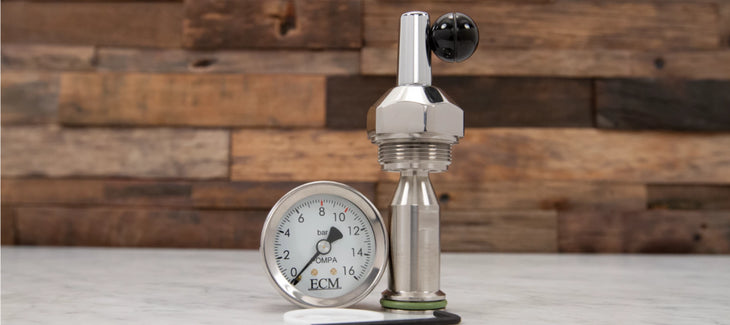
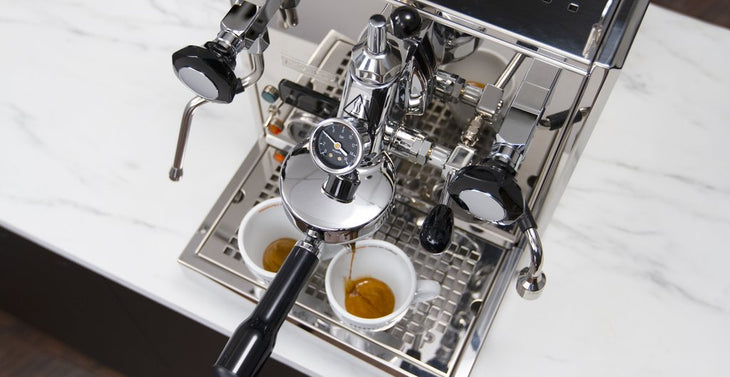
The ECM Synchronika and Profitec Pro 700 handle this through a knob or paddle that adjusts a valve before the group head. Turn it down and water trickles through. Open it up and full pressure hits. You watch your shot timer and pressure gauge and make calls in real time.
The Equipment Side
ECM and Profitec approach flow control slightly differently but the core idea is the same. A valve sits between the pump and group head, letting you throttle flow manually. Both brands integrate this cleanly into their dual boiler designs, so you are not hacking together aftermarket parts.
Interestingly, flow control also lets you mimic lever machine behavior on a pump-driven setup. Take the Profitec Pro 800, a spring lever machine. Pulling the lever fills the group gently, moistening the puck before full pressure releases. Flow control on the Pro 700 or Synchronika lets you recreate that same gentle start without the lever mechanics. For people who love lever shots but want heat exchanger or dual boiler convenience, this bridges the gap.
Note that Dalla Corte offers flow profiling through their Mina machine and app, which is a separate system entirely. The Mina uses digital control rather than manual valves, letting you save and repeat profiles automatically. ECM and Profitec keep it manual, which some baristas prefer for hands-on experimentation.
What You Can Actually Do With It
Flow control is not just about chasing better espresso. It is about having options.
For standard espresso, you can soften acidity on light roasts by starting at two to three grams per second for five to eight seconds, then ramping to five to seven grams per second for the main extraction. The slow start lets the puck saturate evenly, reducing channeling that causes sour, uneven shots.
Medium roasts are forgiving and a good starting point for learning. Begin with a gentle five-second pre-infusion at five to six grams per second, then increase about thirty percent to six and a half to eight grams per second. This highlights the balanced sweetness most people associate with classic espresso.
Dark roasts are trickier because they extract easily and can turn bitter fast. Start bolder at ten to twelve grams per second for four seconds to establish flow, then immediately drop to four grams per second. This pulls out the rich chocolate and caramel notes without overextracting the burnt, ashy compounds that make dark roasts taste harsh.
Beyond espresso profiles, flow control lets you brew what some call a coffee shot, essentially filter-style coffee through your espresso machine. Grind coarser than usual, set flow very low, and run a longer extraction to fill a cup. It will not match a proper pour-over for clarity, but it gives you a drip-style option when that is what you want.
How It Works in Practice
The mechanics are straightforward once you understand what to watch. Set your starting flow rate, engage the pump, and watch the pressure gauge. The needle tells you how much resistance the puck is giving. A slow climb means good saturation. A spike means channeling or too fine a grind. A flat line means the puck is not resisting enough, possibly too coarse or unevenly distributed.
Time matters too. A forty-second shot with slow pre-infusion extracts differently than a forty-second shot at full pressure from the start. The total time is the same but the flavor is not. Flow control lets you shape where extraction happens, front-loading sweetness or back-loading body depending on what the coffee needs.
Danilo Lodi, a coffee professional who has worked extensively with profiling, breaks it down by roast level in practical terms. His light roast approach starts very slow, builds gradually, and never rushes. His dark roast approach starts fast then immediately restrains. The contrast shows how flexible this tool is. Same machine, same grinder, completely different results based on how water moves through the coffee.
The Real Benefits
For home baristas, flow control means you can stop blaming your grinder for every bad shot. Sometimes the grind is fine but the extraction is wrong. A light roast that tastes thin and sour at standard pressure might turn sweet and complex with a ten-second slow start. A dark roast that tastes burnt might clean up with restricted flow in the back half of the shot.
For professionals, it means consistency across different coffees. Instead of changing the entire machine setup for every single origin, you adjust the flow profile. Your grinder stays the same, your dose stays the same, your workflow stays efficient. The coffee changes, the approach adapts.
It also means experimentation without buying more equipment. Want to see what a lever-style shot tastes like? Slow your pre-infusion. Curious about filter-style extraction? Drop the flow and extend the time. You are not locked into one machine philosophy. You have a range.
What to Watch Out For
Flow control is powerful but not foolproof. Go too slow and you choke the machine, creating a stalled shot that tastes harsh and overextracted. Go too fast on a dark roast and you blow through the puck, channeling violently and getting thin, bitter espresso. The pressure gauge is your friend here. If it spikes over nine bar immediately, your flow is too high or your grind is too fine. If it barely reaches six bar, your flow is too low or your grind is too coarse.
It also adds a variable to manage. Some people love the hands-on control. Others find it one more thing to mess up when they just want coffee. If you prefer consistency over experimentation, a standard machine with good temperature stability might suit you better.
FAQ
- What is flow control on an espresso machine?
Flow control lets you adjust how fast water moves through your coffee puck during pre-infusion and extraction. Instead of full pressure from the start, you can ease in, hold back, or ramp up using a knob or paddle. This changes how flavors develop in the cup. - Do I need it to make good espresso?
No. Plenty of excellent espresso comes from machines without it. Flow control is a tool for dialing in challenging coffees, experimenting with profiles, or fixing extraction problems that grind adjustments cannot solve. - Which machines have flow control?
ECM and Profitec offer integrated flow control on models like the Synchronika and Pro 700. Dalla Corte builds digital flow profiling into the Mina with app-based saving. Some machines accept aftermarket flow control devices. - Can I add flow control to my existing machine?
Sometimes. Aftermarket kits exist for certain E61 group head machines. Check compatibility with your specific model before buying. Installation ranges from simple to involved depending on plumbing access. - How do I know what flow rate to use?
Start with roast-level guidelines. Light roasts begin at two to three grams per second. Medium roasts start at five to six. Dark roasts can handle ten to twelve initially before dropping. Watch your pressure gauge and taste the results. Adjust from there. - Does flow control replace good grinding and distribution?
No. Flow control cannot fix a bad grind or uneven puck. It works best when your fundamentals are solid. Think of it as fine-tuning, not a rescue tool. - What is a coffee shot?
A coffee shot is filter-style coffee brewed through an espresso machine using low flow and coarse grind. It produces a longer, lighter beverage than traditional espresso, similar to drip or pour-over. - Can flow control damage my machine?
Not if used correctly. Extremely low flow for extended periods can overheat some pumps. Constant valve adjustment wears components faster than fixed flow. Follow manufacturer guidelines and avoid extremes. - Is flow control worth the extra cost?
It depends on your habits. Worth it if you experiment often, struggle with specific roasts, or want lever-style shots from a pump machine. Less critical if you stick to one bean, one recipe, and consistent results.
Flow control is not a gimmick. It is a genuine shift in how you extract espresso, giving you tools to fix problems and enhance flavors that were previously out of reach. The ECM Synchronika and Profitec Pro 700 handle it elegantly, integrating manual control without cluttering the workflow.
It will not save bad coffee or compensate for poor grinding. But paired with decent beans and solid technique, it lets you pull shots that match your taste rather than accepting whatever the machine defaults to. That is the real appeal. Not more gadgets, but better coffee in your cup.
